
Talent - The New Currency in Boardroom Governance
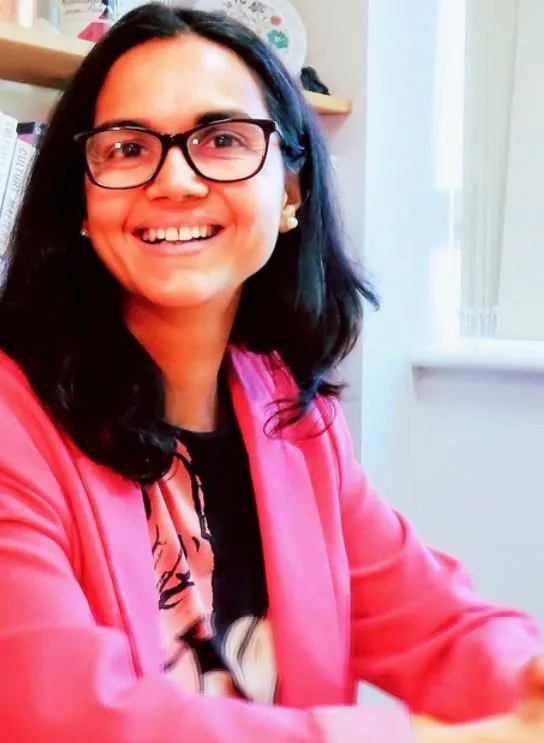
(By Professor Debarpita (Deba) Bardhan-Correia)
Let me begin with a question: if every piece of technology your organisation owns was suddenly made available to your closest competitor tomorrow, what exactly would still make your organisation worth investing in..? Most organisations will eventually have access to similar technologies, similar data and increasingly similar products and services. In such a world, sustainable competitive advantage becomes harder to achieve and even harder to sustain. I believe the answer lies in talent.
දැන්වීම
That is why I believe talent has become the new currency of boardroom governance. Technology can be purchased, information can be accessed and products can be copied. Human potential cannot. The real differentiator is therefore no longer what organisations own, but what they are able to unleash through the ingenuity of their people, the creativity of their teams, the judgement of their leaders and the strength of their culture.
I learned that lesson long before I became Dean, before I completed my PhD and before I entered academia. It happened in a banquet hall at The Oberoi. As a young employee helping to prepare a venue, I overheard a mother tell her son, "Look at them. Look at how hard they work. This is exactly what happens when you don't study enough." What bothered me was not the comment about hard work. I have always been proud of hard work. What troubled me was the assumption that current circumstances somehow determine future potential. What she could not see was the possibility that existed behind the role. Perhaps that moment shaped much of my professional life, because the question facing every board today is not whether talent matters. It always has. The question is whether we recognise its value before somebody else does.
That question later became the focus of my doctoral research. I became fascinated by understanding why some people consistently go above and beyond while others simply do what is required. After years of research, I arrived at a simple conclusion: talent creates potential, culture shapes behaviour, and discretionary effort converts potential into performance.
To me, this is the missing link in organisational success. Talent provides capability, but capability alone guarantees nothing. Potential is much like an acorn. Within that small acorn lies the possibility of a mighty oak. Yet an acorn becomes an oak not because it possesses potential, but because it grows in the right conditions. The same is true of people. Culture is the soil in which talent takes root and develops. When people feel trusted, valued and connected to purpose, discretionary effort emerges. Talent creates possibility. Culture creates conditions. Discretionary effort creates growth. Performance becomes the fruit.
I saw this principle in action when flying Southwest Airlines for the first time. During the flight, the crew discovered it was my nephew's eighteenth birthday and somehow created a makeshift crown from snack packets and bits of string. They persuaded an entire aircraft full of strangers to sing Happy Birthday. What fascinated me was that nobody instructed them to do it. No KPI required it. No performance target rewarded it. They acted because they wanted to. The crown was not really a birthday gift. It was culture made visible. Herb Kelleher famously argued that if organisations take care of employees, employees take care of customers, and customers take care of shareholders. In many ways, his philosophy and my research were exploring the same question: how do organisations create environments in which people willingly contribute more than is required..?
This brings me to Artificial Intelligence. Every board today is discussing AI, and rightly so. AI will reshape jobs, automate processes and transform how work gets done. Yet perhaps the more interesting question is not what AI can do. It is what remains uniquely human.
Technology is becoming increasingly accessible. Judgement, trust and culture are not. The philosopher Michael Polanyi observed that we often know more than we can explain. Experienced leaders develop judgement through years of decisions, relationships and lived experience. AI can process information. Boards are paid for judgement. Similarly, AI can generate possibilities, but culture determines whether people act on them. As intelligence becomes more abundant, uniquely human capabilities become more valuable. Judgement becomes more valuable. Trust becomes more valuable. Empathy becomes more valuable. Leadership becomes more valuable. Technology may create capability, but humanity creates differentiation.
These developments have profound implications for boards. One of the greatest risks organisations face is not technological disruption but the gradual erosion of organisational capability. When engagement weakens, leadership pipelines weaken. When leadership pipelines weaken, resilience declines, and eventually performance suffers. That is why future-ready boards must move beyond succession planning and focus on succession cultures. Too many organisations ask, "Who replaces the CEO..?" Future-ready organisations ask, "Who are our next twenty leaders, and what are we doing today to develop them?" Strong organisations do not simply maintain succession plans. They cultivate environments in which future leaders continuously emerge.
Throughout my career in education, one lesson has been reinforced repeatedly: potential is often invisible. I occasionally meet students who tell me that seeing somebody like them in leadership makes them believe they can do it too. Those moments remind me that leadership creates visibility and visibility creates possibility. The organisations that thrive are often those that recognise talent before everyone else does. Overlooked talent is not simply an inclusion issue. It is a competitiveness issue.
There is a Sri Lankan proverb that I have always found meaningful: Gahaka phalayen gasa handunayi - a tree is known by its fruit. I think this is a powerful metaphor for governance. Boards are not ultimately judged by the papers they approve, the meetings they attend or even the strategies they sign off. They are judged by what emerges because of those decisions: the leaders they develop, the cultures they create, the opportunities they provide and the capability they leave behind. In many ways, boards are planting trees whose shade they may never sit under themselves.
This idea brings us back to the distinction between the acorn and the oak. If we focus only on the acorn, we underestimate its potential. Yet within that small acorn lies the possibility of a mighty oak tree. The same is true of talent. Future leaders rarely arrive fully formed. Potential often appears long before performance. One of the greatest responsibilities of governance is therefore to recognise the oak while everyone else can only see the acorn and to create the conditions in which that potential can flourish.
So what should boards actually do differently..? I would suggest one word: HUMAN. Humanity means treating people as human beings rather than resources. Understanding means appreciating what motivates people and stakeholders. Meaning means helping people connect their work to a larger purpose. Adaptability means creating cultures where learning and relearning are normal. Nurturing Potential means identifying capability long before it becomes obvious. The role of boards is to ensure that as organisations become more technologically capable, they remain deeply human.
When we return to our boardrooms, there are five questions worth asking. Do we know who our future leaders are? Are we investing in talent with the same discipline that we apply to financial capital? Are we creating a culture where people feel safe enough to contribute their best ideas? Are we developing leaders who are ready for both an AI-enabled and a human-centred future? And whose potential are we currently overlooking..?
If talent is the new currency of boardroom governance, are we treating it as our most valuable asset? The future will belong to organisations that are best at recognising, developing and unleashing human potential. Technology may create parity, but humanity creates differentiation.
Because somewhere in your organisation right now is an acorn. A future leader. A future innovator. A future source of competitive advantage. The question is not whether that acorn has potential. The question is whether your board will recognise it, nurture it and help it become the oak tree it was meant to be, or whether it will take root somewhere else before you realise its value.