
Ranil’s Return - The Political Equation for Resolving Sri Lanka’s Economic Crisis
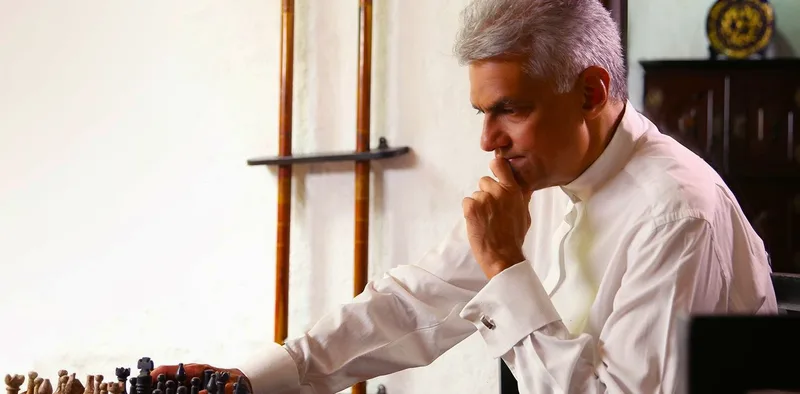
A People Who Cannot Even Borrow Rs. 500 in an Emergency
The Connection Between the Future Aspirations of Gen Z and Ranil Wickremesinghe’s Return
දැන්වීම
Sajith–Ranil Must Unite
The discussion must move beyond individual political ambitions and become a decisive national conversation about the country’s economic future
(Sujith Mangala De Silva)
Sri Lankan politics is moving towards another decisive turning point. It is becoming increasingly clear that the perceptions surrounding political power, public expectations and traditional party politics, which emerged following the economic collapse of 2022, can no longer be sustained in their previous form.
At that time, people faced shortages of fuel, gas, medicines and essential commodities. Today, they are confronted with an even deeper problem. The inability to sustain their lives on their existing incomes, the difficulty of finding even a small amount of money when an emergency arises, and the loss of confidence in the future are among the most pressing concerns.
The public sentiment that people cannot even borrow Rs. 500 in an emergency cannot simply be dismissed as a political slogan. These complaints represent a socio-economic signal that must be examined in terms of household cash flow, the capacity to save and the daily struggle for survival.
The World Bank’s October 2026 Poverty and Equity Report also points out that Sri Lanka’s macroeconomic recovery has not yet restored living standards for every household. According to the report, approximately two-fifths of the population will remain either in poverty or at risk of falling into poverty in 2026. Despite progress in reducing poverty, the report indicates that it may take until 2028 for poverty levels to return to those recorded in 2019.
Against this backdrop, Sri Lanka’s political discourse must be reassessed. In particular, reports that former President and United National Party leader Ranil Wickremesinghe is preparing to return to Parliament in 2027 add a new dimension to the political debate.
Ranil’s Return - An Exercise in Personal Politics or a Debate on Economic Policy..?
Ranil Wickremesinghe has confirmed his readiness to return to Parliament in 2027, while his economic and political advisers have also confirmed this development. “LankaNewsWeek” previously reported this development based on information received by us.
The political significance of this development does not lie solely in Ranil Wickremesinghe’s return to Parliament. It also lies in the re-emergence of his political experience in the national debate, particularly in relation to the economic stabilisation programme implemented after the 2022 economic crisis, negotiations with the IMF, debt restructuring and the restoration of international financial confidence. However, what matters now is not merely his past role. It is the practical policy solutions he can offer to address the economic challenges ahead.
The renewed emergence of Ranil Wickremesinghe’s name in discussions about the country’s economic stability can be understood against this background. However, his experience and international connections alone cannot guarantee future economic recovery. His proposed solutions concerning employment, incomes, investment, poverty and the cost of living must be subjected to equally rigorous scrutiny.
Is Gen Z’s Political Position Aligned with Ranil, or Is There Another Alternative..?
The role of Gen Z and the Millennial generations in determining Sri Lanka’s political future can no longer be ignored. During the 2022 Aragalaya, the younger generation demonstrated that political accountability, economic justice, equality of opportunity and transparency in governance mattered more than the traditional electoral bases of political parties.
The political aspirations of these generations have now evolved. They are no longer interested solely in debating the political leaders of the past. Their priority concerns include how they can secure employment, how they can obtain capital to start a business, how they can build a future with decent wages, and how an environment can be created in which they can live in Sri Lanka without being compelled to leave the country.
In a statement reported on 31 October 2026, Ranil Wickremesinghe reportedly said that a mere alliance between the UNP and the SJB would not guarantee electoral victory, and that winning the confidence of approximately eight million people belonging to Gen Z and the Millennial generations was essential.
This statement is significant because Ranil Wickremesinghe himself has acknowledged the decisive political importance of the younger generation. However, it does not establish that Gen Z already supports him. Rather, his statement indicates that winning the confidence of this generation remains an unresolved political challenge.
Political observations and public discussions conducted by the “LankaNewsWeek” team have also identified views that place particular emphasis on Ranil Wickremesinghe’s experience and role in managing the economic crisis. However, these observations cannot be presented as representative of the entire Gen Z generation or the entire population without a formal survey methodology, a defined sample size and verifiable results.
Therefore, the question should not be limited to whether Gen Z supports Ranil Wickremesinghe. The more important question is whether Ranil Wickremesinghe and other political leaders can present policies capable of responding to the economic aspirations of the younger generation.
Are Ranil’s Experience and Sajith’s Political Strength Alternatives to Each Other, or Complementary Forces..?
There is a question that Sri Lanka’s political discourse must now confront. Is it sufficient for Ranil Wickremesinghe and Sajith Premadasa to continue pursuing separate political paths in the face of the country’s economic and political challenges, or should common ground be explored between their political bases, experience and policy capabilities..?
The political experience of former President and United National Party leader Ranil Wickremesinghe, his expertise in negotiating with international financial institutions and his experience in public financial management are key elements of his political role.
Sajith Premadasa’s political role, meanwhile, reflects an emphasis on social welfare, education, healthcare, the living conditions of low-income communities and the broader distribution of economic benefits. The economic programme presented by his party in 2024 also contained a range of proposals concerning the continuation of the IMF programme, taxation policy and development through private investment.
There are differences between these two political approaches. However, it cannot be concluded that they are necessarily incompatible in every respect. Economic stability and social justice are not mutually exclusive objectives. Stabilising a country’s economy is essential. Equally important is ensuring that the benefits of that stability reach ordinary people.
It is therefore a matter that deserves serious discussion whether a policy consensus can be developed between Ranil Wickremesinghe’s experience and Sajith Premadasa’s socio-economic priorities.
Why Should We Discuss a Ranil–Sajith Alliance..?
A political alliance is not simply about the leaders of two parties appearing together on the same platform for a photograph. Such an alliance must involve building a common policy agreement on the country’s future. If discussions about a political alliance between Ranil Wickremesinghe and Sajith Premadasa are to take place, they should be based on at least five key areas.
First – A Common Understanding on Economic Policy.
A clear and common policy framework is required on the IMF programme, debt restructuring, government revenue, taxation policy, public expenditure and foreign investment. The central question must be how to reduce the burden on the people while maintaining economic stability.
Second – An Answer to the Daily Economic Struggles of the People.
When a family can no longer manage the costs of food, electricity, water, transport, education and healthcare within its income, statistics about economic growth alone are not enough for the people. What they need is an economy that allows them to have money left in their hands. They need a financial environment in which they can obtain a loan when an emergency arises, a market in which they can sustain a small business, and an economy in which young people can find employment.
Third – A New Economic Compact for the Younger Generation.
Gen Z needs more than political promises. It needs genuine opportunities in technology, artificial intelligence, the digital economy, new entrepreneurship, vocational training and access to international employment markets. Rather than merely drawing young people into political parties, it is far more important to give them opportunities to participate in economic decision-making.
Fourth – A Credible Programme to Combat Corruption.
Since the 2022 crisis, public confidence in politics has been severely tested. Therefore, no political alliance should appear to be another old-style power-sharing arrangement. Transparency in public procurement, state-owned enterprises, the use of public funds and political accountability must be essential conditions.
Fifth – Democracy and the Sharing of Power.
Within any political alliance, party identity, leadership, parliamentary responsibilities and mechanisms for policy decision-making must be clearly defined. Otherwise, there is a risk that such an alliance could become nothing more than a short-term political arrangement.
Why Is Ranil Emerging as an Alternative Amid the Economic Crisis..?
There are several reasons why Ranil Wickremesinghe’s name has re-emerged in public discussions about the country’s economic crisis. In 2022, he assumed the presidency amid a foreign exchange shortage, a debt repayment crisis and the collapse of essential commodity supplies. Subsequently, advancing an economic stabilisation process in cooperation with an IMF programme and conducting international negotiations on debt restructuring became major tasks during his administration. That experience remains part of his political capital today.
However, the tax policies implemented during that period, the cost of living, electricity tariffs, social protection and the economic pressure placed on the people have also attracted criticism. Therefore, any discussion of his economic management must examine not only its achievements but also its limitations and social costs.
The fact that Ranil Wickremesinghe has experience in managing an economic crisis and the question of whether his proposed future programme can fulfil public expectations are two different matters.
Sajith Premadasa’s Role Cannot Be Overlooked
The political role of Sajith Premadasa cannot be overlooked in discussions about Ranil Wickremesinghe’s return. The Samagi Jana Balawegaya, led by Premadasa, functions as the main opposition force in Parliament. The party secured a significant electoral base at both the 2024 presidential election and the parliamentary election.
That political base and its connection with the public are important factors in any reorganisation of opposition politics. Furthermore, the economic programme presented by Sajith Premadasa’s party included proposals on continuing the IMF programme, revising taxation policy, encouraging private investment and strengthening social protection.
Accordingly, if discussions take place between Ranil Wickremesinghe and Sajith Premadasa, they should not be framed as one leader submitting to the other. Instead, they should involve an open discussion of the policies on which they can agree and the issues on which they cannot. Ranil Wickremesinghe himself has stated that an alliance alone is not sufficient.
There is another important consideration here. In a statement reported on 31 October 2026, Ranil Wickremesinghe said that an alliance between the UNP and the SJB alone would not guarantee electoral victory. He also stressed the need to win the confidence of the younger generation, build a new identity for the party and connect with young people through digital platforms. This is politically significant because the question facing the public today is not simply whether two parties will unite. It is what new programme such an alliance will present to the people.
If an alliance of established political leaders fails to respond to the aspirations of the new generation, it may be reduced to a mere exercise in political arithmetic. However, if it presents a programme built on policy transformation, youth participation and transparency, it could open the way for an entirely different political conversation.
The Same Question for Both Government and Opposition: Can They Change People’s Lives..?
The principal challenge facing all political forces in Sri Lanka today is to bring about a genuine improvement in people’s lives. Economic growth is important. Increasing foreign exchange reserves is important. Successful debt restructuring is important. However, if ordinary families do not feel the benefits of this progress, its political and social value remains limited.
A Reuters report published on 18 November 2026 indicated that Sri Lanka’s current IMF programme is scheduled to conclude in March 2027, and that discussions are taking place on a possible follow-up IMF programme before foreign debt repayments rise again in 2028. According to the report, the country will need nearly US$3 billion to meet foreign debt repayments in 2027, while the figure could rise to approximately US$3.6 billion in 2028.
This situation demonstrates that the economic crisis cannot be resolved through political slogans. The country needs a long-term financial management strategy and an economic plan that brings together export revenue growth, investment, employment and social protection.
Therefore, Ranil Wickremesinghe, former President; Sajith Premadasa, Opposition Leader; and the current government led by the President must all answer the same question before the people: How will your policies change the lives of ordinary citizens?
The Final Decision Belongs to the People, Not the Leaders
Reports about Ranil Wickremesinghe’s preparations to return to Parliament in 2027 have opened up a new political debate in Sri Lanka. That debate should not be limited to Ranil Wickremesinghe’s return. It must also address the future direction of opposition politics in the country.
The idea of a Ranil–Sajith alliance is a political option that deserves serious consideration. However, such an initiative can succeed only if it is supported by a credible agreement on the policies of the two parties, leadership responsibilities, anti-corruption commitments, economic reforms and the participation of the younger generation—not merely by a personal understanding between the two leaders.
At the same time, the possible political consequences of continuing on separate paths without an alliance must also be openly discussed before the public. Political competition should be a competition of policies, and the country’s economic future must not be subordinated to the personal ambitions of party leaders.
What people need today is not another photograph of a political alliance. They need a country in which they can live on their own income; an economy in which they can find Rs. 500 in an emergency; and a system of governance that provides employment for young people, access to capital for entrepreneurs, fair prices for farmers and a dignified life for working people.
Therefore, the central question in the political debate of 2027 should not simply be whether it is Ranil Wickremesinghe or Sajith Premadasa. It should be whether they can reach an agreement in the national interest and transform that agreement into a programme capable of delivering tangible results for the people.
Bringing Ranil Wickremesinghe’s experience, Sajith Premadasa’s political base and the new aspirations of Gen Z into a single national conversation is a challenge facing Sri Lankan politics. The final decision in that debate must be made not by political leaders, but by the people who are demanding the right to determine their own future.