
SP a Poised to Become Sri Lanka’s Next President - Political Arithmetic Points to a Clear Outcome
2026-05-28 1420
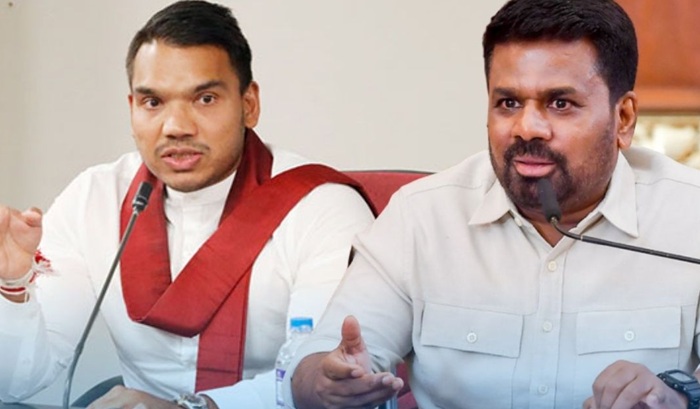
A fierce battle is emerging between Anura and Namal for second place
If the UNP fails to unite with the SJB, it could face an even worse defeat than in the 2020 Parliamentary Election
This analysis is based on the 2024 Presidential Election results
(By Achintha Madhura)
The 2024 Presidential Election Results
Current President Anura Kumara Dissanayake won the 2024 Presidential Election with approximately 42% of the vote. Opposition Leader Sajith Premadasa secured around 33%, while former President Ranil Wickremesinghe obtained nearly 17%, finishing second and third respectively. The fourth position went to Namal Rajapaksa, who received approximately 2.5% of the vote as the candidate of the Sri Lanka Podujana Peramuna.
When analyzing these four political figures, political observers point out that the most stable voter base belongs to Sajith Premadasa. The reason is evident when examining election trends over time. From the 2019 Presidential Election, the 2020 Parliamentary Election contested under his leadership, the 2024 Presidential Election, the 2024 Parliamentary Election, and even the 2025 Local Government Election, the vote share secured either by Sajith Premadasa personally or by the political alliance led by him has remained remarkably consistent, without fluctuating by more than approximately 18%. This consistency is politically significant because it demonstrates the existence of a deeply rooted and loyal electoral base that has remained intact despite changing national political currents.
The Rise and Decline of the Anura Wave
When considering the voter base of President Anura Kumara Dissanayake, it becomes clear that his dramatic rise was largely driven by the extraordinary political wave that emerged during the country’s economic collapse and post-Aragalaya political environment.
In the 2019 Presidential Election, Anura Kumara Dissanayake secured only around 3% of the vote. By 2024, that figure surged to 42%, and later, the National People's Power led by him expanded its parliamentary strength to nearly 61% during the 2024 Parliamentary Election. However, only a few months later, during the 2025 Local Government Election, that support declined sharply to nearly 41%.
This fluctuation strongly suggests that a significant portion of the votes gained by Anura Kumara Dissanayake came from the collapse of the traditional SLPP voter base following the economic crisis. The bankruptcy of the country under the previous administration created widespread public anger and frustration, driving many former SLPP supporters toward the NPP as a protest movement rather than through long-term ideological alignment. As political conditions normalize, those protest votes appear increasingly unstable.
Namal Rajapaksa’s Gradual Recovery
The future role of Namal Rajapaksa could become one of the decisive factors in the 2029 Presidential Election. The SLPP once commanded over 50% of the national vote during the 2019–2020 period. Yet under Namal Rajapaksa’s leadership, the party collapsed to merely 2.5% in the 2024 Presidential Election. This dramatic decline was primarily caused by the economic disaster associated with the administration of former President Gotabaya Rajapaksa and the massive public uprising that followed.
Large sections of the SLPP’s nationalist voter base temporarily shifted toward the NPP in search of an alternative. However, by the time of the 2025 Local Government Election, signs of a political comeback had already begun to emerge. The SLPP crossed the 9% mark within only a few months after the Presidential and Parliamentary Elections, indicating that a segment of its traditional support base is gradually returning.
Political analysts argue that these voters should not be viewed simply as “left-wing” voters. Rather, they represent a highly emotional, nationalist, and identity-driven bloc that historically gravitates toward strong populist narratives and charismatic leadership.
This trend creates a major challenge for Anura Kumara Dissanayake because a considerable portion of the nationalist vote that temporarily rallied behind him may eventually drift back toward Namal Rajapaksa.
Ranil Wickremesinghe and the UNP Dilemma
The electoral trajectory of Ranil Wickremesinghe also reveals an important political reality. By the 2020 Parliamentary Election, a large majority of traditional right-leaning voters had effectively abandoned him and shifted their support toward Sajith Premadasa. Yet in the 2024 Presidential Election, Wickremesinghe managed to recover approximately 17% of the vote primarily because he campaigned as the leader who stabilized Sri Lanka after the economic collapse.
Even then, many both locally and internationally were surprised that an incumbent President credited with restoring economic stability could secure only 17%. A close examination of the numbers suggests that this 17% was built mainly from two sources, Roughly 10% appeared to come from voters who had previously supported Sajith Premadasa in 2019. Another estimated 7% came from sections of the former SLPP vote base. This raises a crucial question for the 2029 Presidential Election:
Where will this 17% go..?
The answer depends entirely on whether the United National Party chooses to unite with Sajith Premadasa and the Samagi Jana Balawegaya, field a separate candidate, or indirectly support another political force.
However, political probability strongly suggests that the segment of voters who shifted from Sajith to Ranil in 2024 could easily return to Sajith Premadasa in the next election if a broader opposition alliance emerges.
The Anura–Namal Contest for Second Place
The most intense political battle in 2029 may not be for first place — but for second place. Anura Kumara Dissanayake and Namal Rajapaksa are likely to compete fiercely for the nationalist-populist voter segment that once belonged overwhelmingly to the SLPP.
The 2025 Local Government Election already demonstrated that the nationalist vote which temporarily migrated toward the NPP is no longer fully consolidated. Namal Rajapaksa’s rapid growth from 2.5% to over 9% within months reflects this emerging trend.
Furthermore, Anura Kumara Dissanayake entered the 2024 election without ever having governed the country before. This allowed him to make ambitious promises without carrying the burden of governance. Many voters now believe that those promises were politically effective during the election campaign but increasingly difficult to deliver in practice.
At the same time, although the current government attempts to claim full credit for stabilizing the economy, many Sri Lankans continue to believe that Ranil Wickremesinghe played the central role in preventing total economic collapse.
Additionally, Sri Lanka is expected to begin major debt repayments from 2028 onward. If further economic sacrifices become necessary, public frustration could create additional political pressure on the current administration.
There is also growing recognition that many nationalist Sinhala voters do not fully align with the ideological direction of the NPP. As this contradiction becomes clearer, a sizeable portion of the vote Anura secured in 2024 may gradually shift elsewhere — particularly toward Namal Rajapaksa.
Sajith Premadasa’s Path to Victory
When all political trends, electoral mathematics, and voter movements are examined together, one conclusion increasingly stands out, Sajith Premadasa appears to possess the strongest pathway toward securing the highest vote share in the 2029 Presidential Election.
Unlike the fluctuating voter bases of his rivals, Sajith’s support base has remained comparatively stable across multiple elections. If the opposition vote consolidates around him — particularly through cooperation between the UNP and SJB — he could realistically surpass the 50% threshold required for outright victory.
Meanwhile, the rivalry between Anura Kumara Dissanayake and Namal Rajapaksa for the nationalist-populist vote could divide that political space and further strengthen Sajith Premadasa’s position.
If current political trends continue, the 2029 Presidential Election could ultimately evolve into a contest where Sajith Premadasa emerges not merely as a candidate, but as the most electorally balanced and strategically positioned leader in Sri Lankan politics today.







Lanka Newsweek © 2026