
Is Sri Lanka Cricket’s Interim Administration Legal or Ethical..?
2026-05-19 1377
“Born Again” Influence on Buddhist Cricketers Raises Serious Concerns
Players Fear Speaking Openly About “Born Again” Influence Within the Team
Sri Lanka Cricket – God Arrives at the President’s Invitation..!
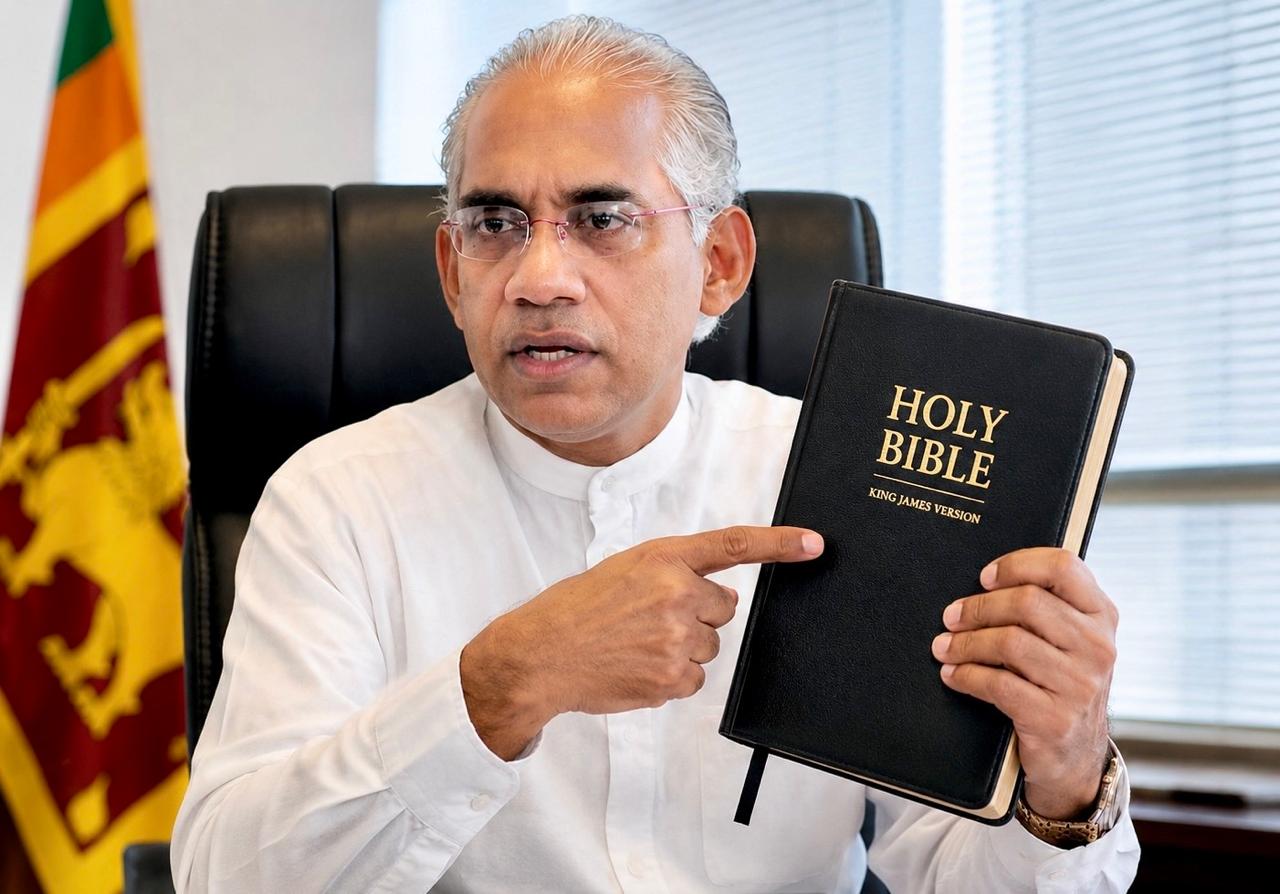
Eran Wickramaratne’s Robe Raised to the Sky – Will God Save Him..?
A Bankrupt Political System Unable to Select Suitable Leadership
The long-standing crisis surrounding the administration of Sri Lanka Cricket reached a new level on April 29, 2026. Following the resignation of former Sri Lanka Cricket President Shammi Silva and his executive committee, the Minister of Sports appointed a nine-member “Transformation Committee,” triggering a nationwide debate about the future of sports governance in the country.
Former Member of Parliament Eran Wickramaratne was appointed as Chairman of the committee, while internationally renowned cricketers Kumar Sangakkara and Roshan Mahanama were also named as members. Their inclusion brought even greater public attention to the governance crisis.
Officials from the International Cricket Council later arrived in Sri Lanka and reportedly granted the interim committee a three-month period while advising that fresh elections be held in July. Although this appeared to provide a level of international recognition for the temporary administration, serious questions have emerged within Sri Lanka regarding whether the entire process is legally and ethically justified.
The Core Question — Is the Interim Administration Legal or Ethical..?
Poor performances by the Sri Lankan national cricket team, intense criticism on social media, and growing pressure from the government were among the primary reasons behind the resignation of the Sri Lanka Cricket administration.
While player performance remains the responsibility of the athletes themselves, sports management experts point out that providing proper training systems, professional environments, transparent selection procedures, and long-term planning are all responsibilities of cricket administrators. They further stress that structural reforms are essential, especially given the long-standing allegations surrounding financial influence, match-fixing networks, and hidden power structures within South Asian sports administration.
However, the debate surrounding the interim committee intensified after its Chairman, Eran Wickramaratne, was identified as a “Born Again” religious leader. The 2023 Kusala Sarojini Committee Report stated that several “Born Again” groups had allegedly attempted to influence Buddhist cricketers, and that at least one player had begun following that ideology. However, the committee also concluded that there was no direct evidence proving interference in the official player selection process.
Despite this, the report highlighted that several players were reluctant to speak openly about religious influence within the team due to fears that it could negatively affect their professional careers. “The report states that players are afraid to openly discuss religious influence within the team.” Two members of the interim committee — Sidath Wettimuny and Attorney Dinal Phillips — are also petitioners in the ongoing court case CA 460/2020 filed against Sri Lanka Cricket and the Ministry of Sports.
The case is scheduled to be recalled in July 2026, and this has sparked serious debate over whether it is ethical to hand over the administration of Sri Lanka Cricket to individuals who are themselves litigants in a case against the institution. Several legal experts argue that this situation creates a serious “Conflict of Interest,” which could severely damage public trust and transparency within the governance system.
Public Confidence Erodes When Litigants Are Given Administrative Power
This issue has rapidly evolved into a political controversy due to growing concerns over the Minister’s selection process. A widely discussed opinion across social media and among political analysts is that Sri Lanka’s political system has become so bankrupt that it is unable to find a suitable individual — not only from the opposition, but even from within its own ranks — to lead the administration of Sri Lanka Cricket. That perception has now become part of the national political discourse.
The temporary recognition granted by the International Cricket Council, along with the three-month transitional period and the directive to hold elections in July, is being viewed internationally as an attempt to restore credibility to Sri Lanka Cricket governance. Yet internally, the crisis of public trust remains unresolved.
The upcoming Sri Lanka Cricket elections scheduled for July are likely to become a defining moment for the future of cricket administration in the country. Amid legal disputes, religious allegations, political decisions, and international intervention by the International Cricket Council, rebuilding trust in Sri Lanka Cricket governance will not be an easy task. Nevertheless, rebuilding Sri Lanka Cricket is essential — for the game, for the players, for the people, and for the nation.







Lanka Newsweek © 2026